utility computing

What is utility computing?
Utility computing is a service provisioning model where a provider makes computing resources, infrastructure management and technical services available to customers as they need them. The provider then charges the customer for the amount of services they use rather than a flat-rate fee. Like other types of on-demand computing -- such as grid computing -- the utility model seeks to maximize efficient resource use, minimize associated costs or both.
The word utility is used to make an analogy to other services, such as electrical power, that seek to meet fluctuating customer demand and charge for the resources based on usage. This approach, sometimes known as pay-per-use or metered services, is becoming increasingly common in enterprise computing and is sometimes offered to consumers for internet service, website access, file sharing and other applications.
Another version of utility computing used in the enterprise is the shared pool utility model. With this approach, the enterprise centralizes its computing power and resources to serve a large number of users and avoid unnecessary redundancy.
Utility computing examples
Virtually any activity performed in a data center can be replicated in a utility computing offering. Services available include the following:
- access to file, application and web servers;
- infrastructure as a service, software as a service and platform as a service;
- virtually unlimited processing power and computation storage space;
- support for customer computing applications;
- storage space for data, databases and applications;
- cloud storage and cloud computing;
- utility services, like power, heating, ventilation and air conditioning (HVAC), and communications;
- general IT technical expertise; and
- specialized expertise, such as ransomware response and application development.
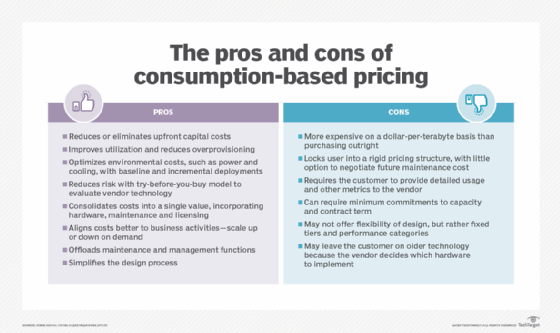
Utility computing benefits
The term managed services is also used to describe utility computing. It is an overall term for various third-party technology and support services. The many as-a-service offerings that are available are examples of how utility computing has matured.
Reasons for using managed computing services include these seven advantages:
- reduction in capital costs to obtain hardware, software and specialized assets -- such as intrusion detection systems and cybersecurity applications -- that support IT operations;
- cost savings from cutting down the floor space needed to house equipment racks, power supplies and HVAC systems;
- lower costs for power, HVAC and physical security requirements previously required in data centers and other IT facilities that are no longer needed;
- the availability of virtually unlimited computing and storage resources to meet unexpected demand;
- reduced costs associated with needing IT staffing because the managed service provider's employees replace IT staff;
- flexibility to deploy resources only when needed; and
- competitive advantages from being able to more easily introduce new products and services.
Utility computing risks
The flexibility and reduced overhead costs that utility computing offers are tempting. However, it is important to consider the potential risks. These include the following 11 downsides:
- limited access to vendor facilities and resources;
- reluctance or refusal of vendors to discuss how they handle customer needs;
- inability to actively manage and maintain IT equipment and systems;
- vendor data breaches that could impact customer systems and data;
- colocation of customer systems and data with other customers;
- theft of customer data by rogue vendor employees;
- damage to customer systems and applications by rogue vendor employees;
- accidents that disrupt customer operations;
- reluctance of vendors to honor -- or even agree to -- customer service-level agreements;
- reluctance or refusal of vendors to conduct disaster recovery tests of client resources; and
- reluctance or refusal of vendors to comply with audit requests.
Learn more about utility computing and the options it provides to cost-effectively manage operations.