
Advanced SQL skills boost data scientists' value
Learning advanced SQL skills can help data scientists effectively query their databases and unlock new insights into data relationships, resulting in more useful information.

The skills people most often associate with data scientists are usually those "hard" technical and math skills, including statistics, probability, linear algebra, algorithm knowledge and data visualization. They need to understand how to work with structured and unstructured data stores and use machine learning and analytics programs to extract valuable information from these stores.
Data scientists also need to possess "soft" skills such as business and domain process knowledge, problem solving, communication and collaboration.
These skills, combined with advanced SQL abilities, enable data scientists to extract value, information and insight from data.
In order to unlock the full value from data, data scientists need to have a collection of tools for dealing with structured information. Many organizations still operate and rely heavily on structured enterprise data stores, data warehouses and databases. Having advanced skills to extract, manipulate and transform this data can really set data scientists apart from the pack.
Advanced vs. beginner SQL skills for data scientists
The common tool and language for interacting with structured data stores is the Structured Query Language (SQL), a standard, widely adopted syntax for data stores that contain schemas that define the structure of their information. SQL allows the user to query, manipulate, edit, update and retrieve data from data sources, including the relational database, an omnipresent feature of modern enterprises.
Relational databases that utilize SQL are popular within organizations, so data scientists should have SQL knowledge at both the basic and advanced levels.
Basic SQL skills include knowing how to extract information from data tables as well as how to insert and update those records.
Because relational databases are often large with many columns and millions of rows, data scientists won't want to pull the entire database for most queries but rather extract only the information needed from a table. As a result, data scientists will need to know at a fundamental level how to apply conditional filters to filter and extract only the data they need.
For most cases, the data that analysts need to work with will not live on just one database, and certainly not in a single table in that database.
It's not uncommon for organizations to have hundreds or thousands of tables spread across hundreds or thousands of databases that were created by different groups and at different periods. Data scientists need to know how to join these multiple tables and databases together, making it easier to analyze different data sets.
So, data scientists need to have deep knowledge of JOIN and SELECT operations in SQL as well as their impact on overall query performance.
However, to address more complex data analytics needs, data scientists need to move beyond these basic skills and gain advanced SQL skills to enable a wider range of analytic abilities. These advanced skills enable data scientists to work more quickly and efficiently with structured databases without having to rely on data engineering team members or groups.
Understanding advanced SQL skills can help data scientists stand out to potential employers or shine internally.
Types of advanced SQL skills data scientists need to know
Advanced SQL skills often mean distributing information across multiple stores, efficiently querying and combining that data for specific analytic purposes.
Some of these skills include the following:
Advanced and nested subqueries. Subqueries and nested queries are important to combine and link data between different sources. Combined with advanced JOIN operations, subqueries can be faster and more efficient than basic JOIN or queries because they eliminate extra steps in data extraction.
Common table expressions. Common table expressions allow you to create a temporary table that enables temporary storage while working on large query operations. Multiple subqueries can complicate things, so table expressions help you break down your code into smaller chunks, making it easier to make sense of everything.
Efficient use of indexes. Indexes keep relational databases functioning effectively by setting up the system for expecting and optimizing for particular queries. Efficient use of indexes can greatly speed up performance, making data easier and faster to find. Conversely, poor use of indexing can lead to high query time and slow query performance, resulting in systems that can have runaway performance when queried at scale.
Advanced use of date and time operations. Knowing how to manipulate date and time can come in handy, especially when working with time-series data. Advanced date operations might require knowledge of date parsing, time formats, date and time ranges, time grouping, time sorting and other activities that involve the use of timestamps and date formatting.
Delta values. For many reasons, you may want to compare values from different periods. For example, you might want to evaluate sales from this month versus last month or sales from December this year versus December last year. You can find the difference between these numbers by running delta queries to uncover insights or trends you may not have seen otherwise.
Ranking and sorting methods. Being able to rank and sort rows or values is necessary to help uncover key insights from data. Data analytics requirements might include ranking data by number of products or units sold, top items viewed, or top sources of purchases. Knowing advanced methods for ranking and sorting can optimize overall query time and provide accurate results.
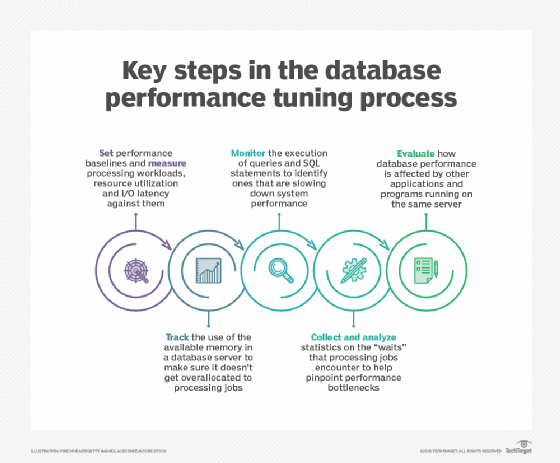
Query optimization. Effective data analysts spend time not only formulating queries but optimizing them for performance. This skill is incredibly important once databases grow past a certain size or are distributed across multiple sources. Knowing how to deal with complex queries and generate valuable results promptly with optimal performance is a key skill for effective data scientists.
The value of advanced SQL skills
The main purpose of data science is to help organizations derive value by finding information needles in data haystacks. Data scientists need to be masters at filtering, sorting and summarizing data to provide this value. Advanced SQL skills are core to providing this ability.
Organizations are always looking to find data science unicorns who have all the skills they want and more. Knowing different ways to shape data for targeted analysis is incredibly desirable.
For many decades, companies have stored valuable information in relational databases, including transactional data and customer data. Feeling comfortable finding, manipulating, extracting, joining or adding data to these databases will give data scientists a leg up on creating value from this data.
As with any skill, learning advanced SQL skills will take time and practice to master. However, enterprises provide many opportunities for data scientists and data analysts to master those skills and provide more value to the organization with real-life data and business problems to solve.