direct access storage device (DASD)

What is a direct access storage device (DASD)?
A direct access storage device is a type of secondary storage device that supports direct access to stored data, as opposed to sequential access, which is slower and less efficient. In this case, secondary storage refers to nonvolatile media, including hard disk drives (HDDs) and solid-state drives (SSDs), whereas primary storage refers to a computer's volatile memory devices such as Random Access Memory (RAM) or data cache.
Integral to DASD -- pronounced DAZ-dee -- is the concept of direct access, which refers to how data is accessed on a storage device. With direct access, data can be written to or read from the storage media by going directly to a specific physical location on the device. A direct access storage device includes the mechanisms that enable read and write operations at any addressable location on the device.
Direct access means not having to search sequentially through the data. With sequential access, data is accessed by starting at one location and then going through successive locations until the data is found. A tape storage system, such as the type used for archiving data, is an example of a sequential access storage device, which is inherently slower than DASD.
What is an example of DASD?
DASD is a removable device that allows applications to access data without having to perform extensive searching or the type of sequential access required for tape storage. Each block of data on a DASD volume is assigned a unique address that represents a distinct location, resulting in faster, more efficient data access. A DASD volume can store all types of data, including system, application, user and temporary data.
Direct access storage devices have historically been associated with mainframe computers and other types of servers. IBM is often credited with having coined the term DASD to refer to HDDs, magnetic drums and data cells. However, the term now incorporates other device types including SSDs, HDDs for personal computers and RAID storage systems.
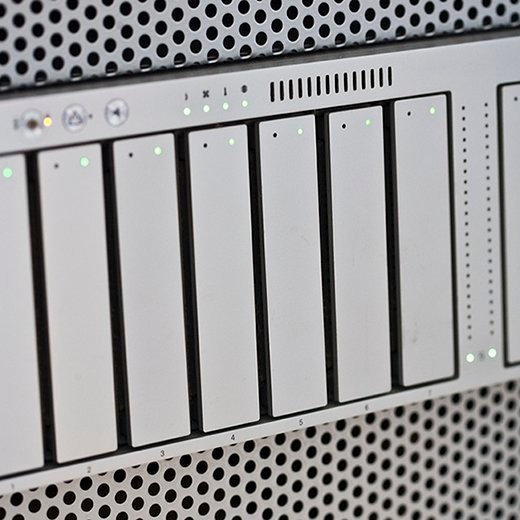
There is still the debate about which device types are considered DASDs. Some, but not all, sources also include storage types such as the optical disc drives in this category, while others exclude certain device types. For example, IBM's AIX documentation states that DASDs are typically rotating disk drives or solid-state disks but that the following devices are not considered DASDs:
IBM documentation also states that these device types are not supported by the logical volume manager (LVM), a form of storage virtualization that provides more flexibility than traditional partitioning when managing disk storage space.
Although there is still some debate about which devices are considered DASDs, the important point is that DASD supports direct access through an addressing system that identifies discrete locations on the storage media, making it possible to access specific data quickly and easily, without the cumbersome overhead that goes with sequential access.